
✓ Written & medically reviewed by Dr. Molly McDonald, PT, DPT, LMT · Updated December 2, 2023
Dr. Molly with Your Goals Physical Therapy, helps active adults recover from their aches and pains to stop everything from hurting while they are doing their favorite activities without medications or surgeries.
This blog discuss two types of leg length discrepancies: fixed leg length discrepancy and flexible leg length discrepancy. What are the different symptoms for each of these leg length discrepancy? Should you worry about having a leg length discrepancy?
The first type of leg length discrepancies you can have is a fix or anatomical difference. This means that one leg physically measures at a different length then the other leg. The trick to diagnosing this is having someone measure from the same fixed points on your legs and comparing the measurement.
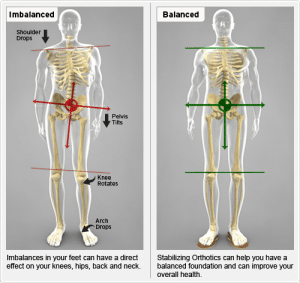
The bodies way of adjusting of long term leg length difference is people find themselves standing on one leg more often or keeping one leg bent while the other might be fully or hyper extended. Or you might find that one foot may be flat and the other may have a normal arch.
The way to “fix” this would be to add a lift to the shoe of the shorter leg depending on the length difference.
But before you go buy some fancy new lifts for your shoes it is far more common for the length discrepancy to be from a rotation in your pelvis which begins us to the 2nd type of leg length discrepancy.
I was told in high school that one of my legs was 3 inches shorter then the other leg when I was assessed by a local practitioner. When I left their office miraculously my legs were the same length. I remember being so confused by how she could spontaneously make my leg grow. Well her fix was not permanent I was suppose to come back a several time then at some point the fix would just stay. Well I dont know if I finished the treatment but I stopped going and I still had to deal with the severe lower back spasms, not being able to lay flat and randomly limping.
Is that a similar story for you or someone you know? Please tell me about their story in the comments below!
How do you fix this? With a full physical and movement assessment of your legs, hip and stomach muscle strength and flexibility to ensure all these area are balanced.
Dr. Molly teaches her clients self-mobilize techniques, in addition to, a home exercise program to empower them to self treat long after they finish their physical therapy session. If you are curious if physical therapy could work for you check out my website for more information.
If you're not quite ready to book an appointment yet, you might have some questions you would like answered first. Click above to request to speak with a PT first.
Are you unsure if physical therapy is right for you? Or maybe you would like to try our services before making a decision? All you have to do is fill out the simple form above.
Ready to move without pain — without meds, injections, or surgery?
Talk with Dr. Molly and get a clear next step for your specific goal.
Request Cost & AvailabilityRequest a Free Discovery VisitReal results from active adults in Cypress, TX
“Dr. Molly has done an outstanding job restoring my leg/hip strength levels to pre-2020 levels in less than a year. I am a competitive powerlifter and am back to deadlifting over 400 lbs.”
“I’m a 39-year-old runner who reached out to Dr. Molly with a nagging knee issue. She gave me several exercises to help alleviate my pain — and once I followed her plan, things turned around.”

About the author
Owner & Physical Therapist, Your Goals Physical Therapy — Cypress, TX
Molly helps active adults end nagging aches and pain and get back to the activities they love — without medication, injections, or surgery. She treats the root cause, not just the symptom, because you shouldn’t be told you can’t do something; you should be shown how.
