
✓ Written & medically reviewed by Dr. Molly McDonald, PT, DPT, LMT · Updated February 4, 2026
Martial arts demand speed, agility, and control. Whether you’re throwing a roundhouse in Taekwondo, pivoting out of a takedown in Jiu-Jitsu, or snapping a front kick in Karate, your knees are working overtime, often without complaint… until they suddenly file one. Loudly.
Watch this article as a video:
One minute you’re feeling unstoppable. The next? There’s a pop, a twinge, or that deep ache that makes you pause mid-training and think, “Welp… that didn’t feel expensive at all.”
Now comes the mental spiral:
Did I tear my ACL? Is it my meniscus? Or am I just getting old and dramatic?
Let’s break down the most common martial arts knee injuries, how to tell them apart, and what you can do to prevent them—or at least shorten your forced Netflix-and-ice-pack phase.
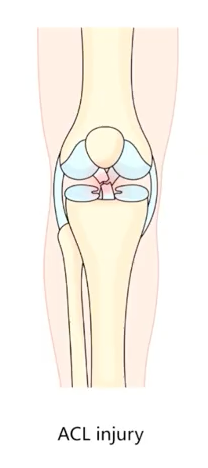
ACL injuries love chaos. They typically happen during quick pivots, jump kicks, or sudden direction changes—basically all the fun stuff.
Many athletes report a loud pop, immediate swelling, and the unsettling feeling that their knee might fold like a cheap lawn chair.
Martial artists are especially vulnerable, as spinning kicks and explosive footwork generate serious torque. In fact, a torn ACL from a roundhouse kick is one of the most common injuries martial artists fear.
When your upper body commits but your knee gets the memo half a second late, the ACL pays the price. If your knee feels unstable afterward, like it doesn’t trust you anymore, that’s a red flag worth respecting.
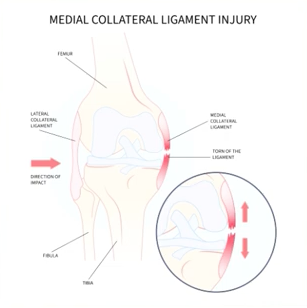
The MCL usually gets injured when force drives the knee inward. Think of a hard sweep kick, an awkward grappling exchange, or a takedown that didn’t quite go according to plan.
Pain is typically felt along the inside of the knee, sometimes with swelling. Unlike ACL injuries, which often happen during high-speed movement, MCL injuries are more about direct force—someone else’s bodyweight and gravity teaming up against you. Rude, honestly.
The good news? MCL injuries often heal well with proper rehab and don’t always require surgery. The bad news? Ignoring them makes everything worse. As usual.
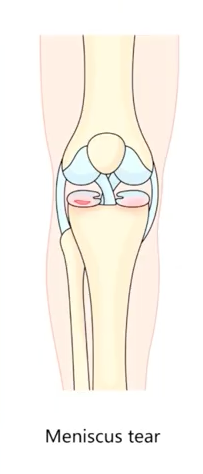
Meniscus tears are the sneaky ones. They often happen when you twist on a planted foot—picture throwing a spinning back kick while your knee decides it’s done cooperating.
Instead of sharp pain alone, you may feel clicking, catching, or even locking deep inside the joint. Some martial artists describe it as feeling like there’s “something stuck” in the knee. Spoiler alert: there is.
These injuries are common in both striking and grappling arts because of constant pivots, awkward landings, and takedowns that don’t respect personal space. Over time, repetitive twisting can wear down the cartilage until one wrong move pushes it over the edge.
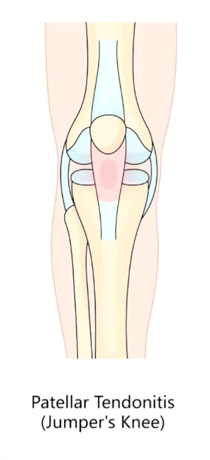
Patellar tendonitis doesn’t show up with drama, it creeps in quietly. It usually starts as a dull ache just below the kneecap and slowly escalates into sharp pain during squats, stairs, or explosive kicks.
If you train hard, often, and treat rest days like a suggestion instead of a rule, this one’s got your name on it. The knee becomes sore, cranky, and increasingly uncooperative, like a training partner who’s mad you skipped warm-ups again.
Strong knees aren’t built by avoiding martial arts. They’re built by training smarter off the mat—yes, even when that’s less exciting than sparring. Here are some knee strengthening exercises we suggest:
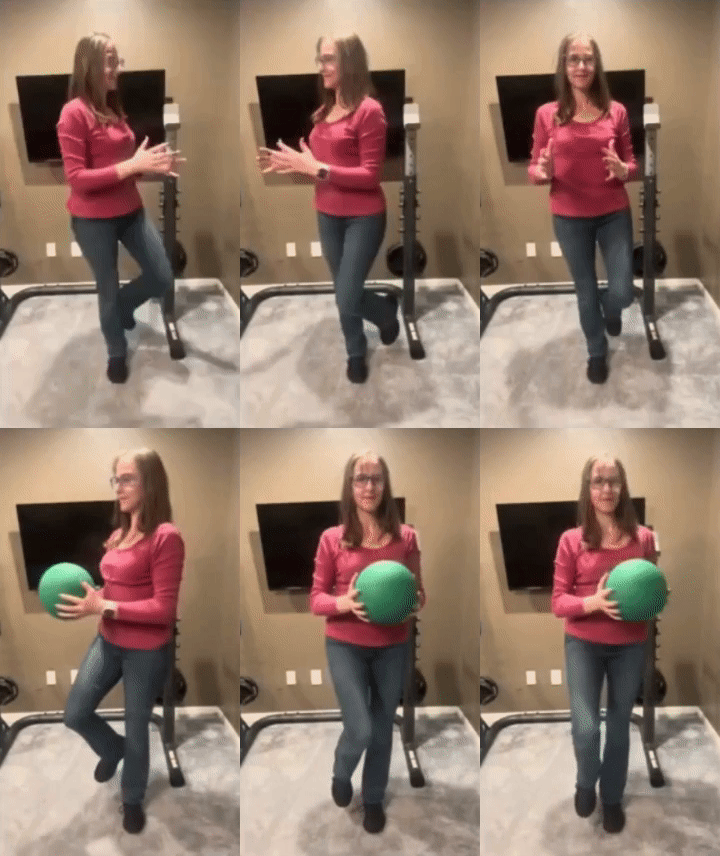
Single-leg balance with torso rotations is a great place to start. Standing on one leg while rotating your upper body mimics pivot control for kicks and spins while teaching your stabilizers to keep the knee from wobbling like it’s on a boat.
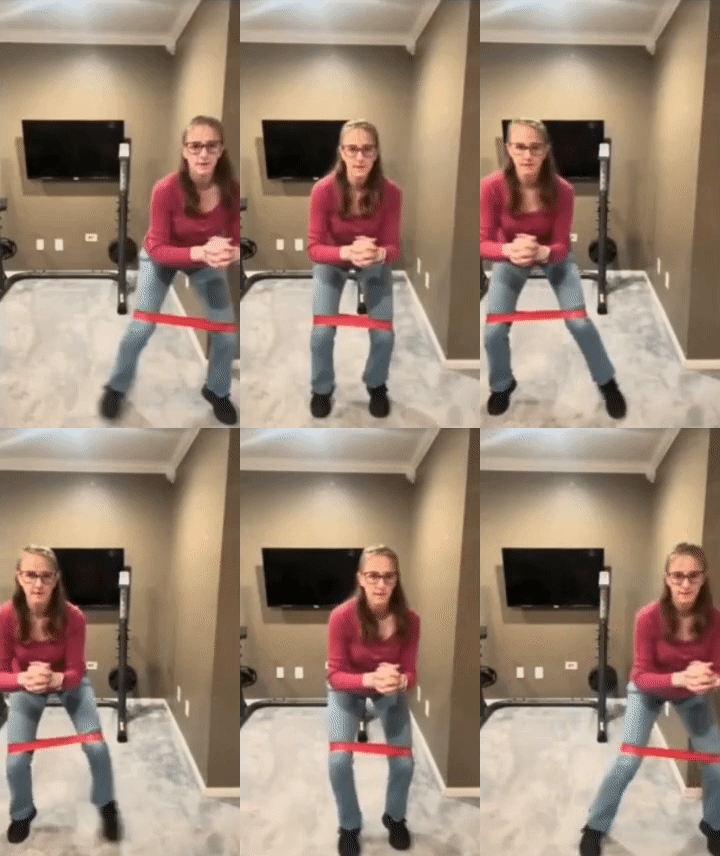
Lateral band walks may not look impressive, but they’re knee bodyguards. Strengthening the hips and glutes helps prevent the knee from collapsing inward, a major contributor to ACL and MCL injuries. Strong hips = knees that don’t panic under pressure.
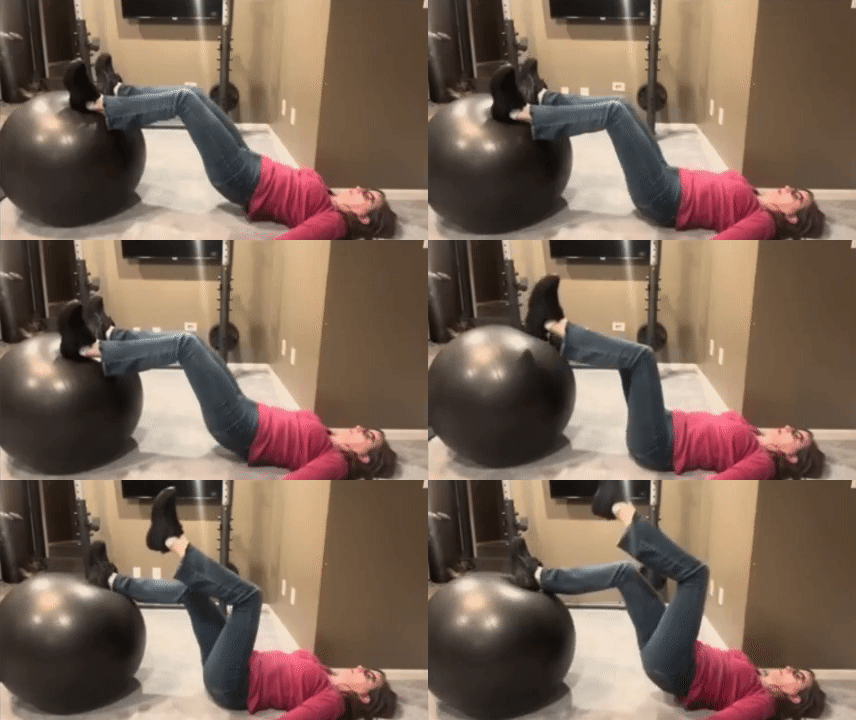
Stability Ball Hamsting curls deserve honorable mention. They’re humbling, difficult, and incredibly effective. Strong hamstrings act as backup support for the ACL, making pivots, landings, and takedowns much safer.

Controlled landing drills are another underrated gem. Practicing small jumps and sticking soft, quiet landings teaches your body how to absorb force efficiently—something your knees will appreciate during unpredictable sparring moments.
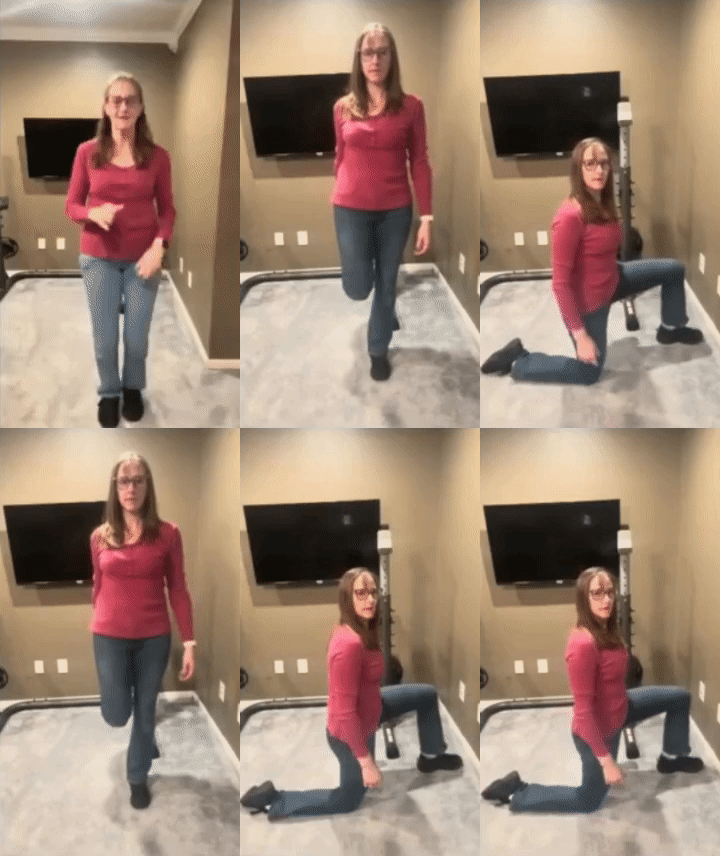
Finally, mobility matters. Tight quads and hip flexors can sabotage even the best technique. Regular stretching and foam rolling keep your kicks smooth and prevent excess stress from dumping straight into the knee joint.
When injury strikes, the goal isn’t just to heal; it’s to get back to training without repeating the same mistake. Dr. Molly bridges the gap between “it doesn’t hurt anymore” and “I can train at full speed without fear.”
Dr. Molly can accurately diagnose what’s going on—ACL, meniscus, tendon, or something far less dramatic—no mystery Googling at 2 a.m. necessary! Rehab focuses on strength, control, and confidence using movements that actually resemble martial arts, not just machines at the gym.
We also look at how you move. Knees collapsing inward, sloppy pivots, heavy landings…these patterns are often the real villains. Fixing them reduces your injury risk and keeps you on the mat longer.
And yes, Dr. Molly helps prevent re-injury. Returning too soon is one of the fastest ways to turn a minor issue into a long-term problem. Pain-free isn’t the same as ready, and your knee knows the difference.
Martial artists are tough, but your knees don’t care how tough you are. They care how you train, how you recover, and whether you listen when something feels off.
If your knee has been popping, aching, or threatening mutiny mid-class, don’t ignore it. The difference between a short break and a year off the mats often comes down to early action.
👉 Need help now? Your Goals PT specializes in keeping martial artists training without surgery or long layoffs. Book a consultation today and get your knees ready for your next fight—because tap-outs are optional, but knee injuries don’t have to be permanent.
Ready to move without pain — without meds, injections, or surgery?
Talk with Dr. Molly and get a clear next step for your specific goal.
Request Cost & AvailabilityRequest a Free Discovery VisitReal results from active adults in Cypress, TX
“Dr. Molly has done an outstanding job restoring my leg/hip strength levels to pre-2020 levels in less than a year. I am a competitive powerlifter and am back to deadlifting over 400 lbs.”
“I’m a 39-year-old runner who reached out to Dr. Molly with a nagging knee issue. She gave me several exercises to help alleviate my pain — and once I followed her plan, things turned around.”

About the author
Owner & Physical Therapist, Your Goals Physical Therapy — Cypress, TX
Molly helps active adults end nagging aches and pain and get back to the activities they love — without medication, injections, or surgery. She treats the root cause, not just the symptom, because you shouldn’t be told you can’t do something; you should be shown how.
